Nail Health

How often is too often?

Guests ask us this every week, usually a little worried. The honest answer is that the service is rarely the problem. What asks something of your nails is how often the product comes off.

Not the culprit

Wearing gel on your nails

A well applied set sits on top of the nail. On its own, it protects far more than it costs you.

Where the wear comes from

Taking it off again and again

Filing, acetone, and prep, repeated often enough, are what thin a nail over time.

The short answer

There is no magic number of weeks. What matters is how much filing and acetone your nails see, and how often they see it.

Two guests can come in exactly as often as each other and walk out with nails in completely different condition. One is getting careful fills that leave her natural nail alone. The other is having everything taken off and rebuilt every few weeks, or picking at a lifted edge in the car.

So rather than counting weeks, this guide looks at what actually causes wear, what a healthy nail looks like between services, and the few signs worth telling us about.

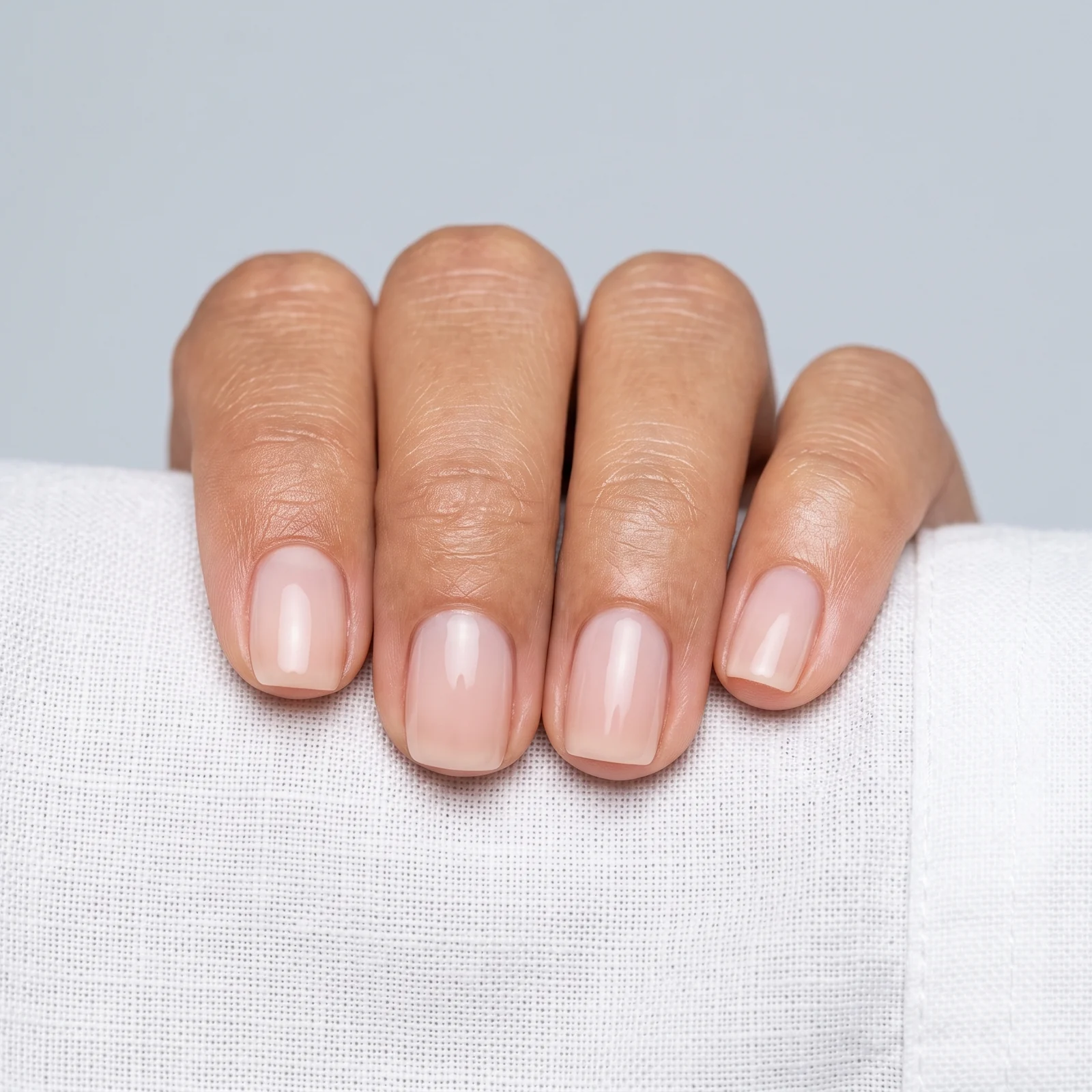
Short natural nails in a soft nude gel, fingers resting over a white linen sleeve

Start here

Nails don’t heal, they grow out

A nail plate is made of layers of keratin, and those layers are not living tissue. That is the part most people have never been told. Skin repairs itself. A nail does not. Anything that thins or roughens the surface stays until it grows out, which takes months rather than weeks.

This is good news and bad news at once. It means a rough patch is not permanent, and it means there is no cream, oil, or treatment that will rebuild a thinned nail before it grows. Oil keeps a nail flexible so it is less likely to split, which is genuinely worth doing, but the repair itself happens at the growth rate of your own nail.

Which is why the goal is not to fix a worn nail. It is to avoid wearing it down in the first place.

The real causes

Three things that ask something of a nail

None of them is the gel itself. All three happen around it, when a set goes on or comes off.

Filing

Buffing and drilling the surface

Some filing is necessary for the product to bond. Filing into the natural nail, or reaching for an electric file when a hand file would do, removes keratin that will not come back.

What we do: file the product, not your nail.

Acetone

Soaking, and soaking too long

Acetone dissolves product, and it also strips the oils from the nail and the skin around it. Occasionally that is nothing. Frequently, it leaves nails dry, brittle, and prone to peeling at the tip.

What we do: the shortest soak that releases the product.

Force

Scraping or peeling it off

If product has not fully released and gets pushed, pried, or peeled, it does not come off cleanly. It takes layers of your nail with it. This is the single most damaging thing that happens to nails.

What we do: if it resists, it soaks longer.

Patterns

The gentler rhythm and the harder one

Same number of appointments. Very different demand on your nails.

Easier on your nails

Less comes off each time, so less is asked of the nail underneath.

A structured Builder Gel fill
The bulk is reduced, lifting is removed, and a thin sound layer stays where it is still bonded. Your natural nail is barely touched.
Coming in on schedule
Every three to four weeks the work is routine. Left longer, there is more grow out to correct and more filing to do.
Letting a set be removed properly
Filed down first, soaked until it releases on its own, and only then lifted away.
Wearing a shorter length
Less leverage at the tip means less lifting, and less lifting means less emergency work.

Harder on your nails

Not forbidden, and worth knowing about so you can space it out.

A full removal and rebuild every visit
This is how Gel-X works, and it is fine on healthy nails. Back to back all year, the filing and acetone add up.
Changing systems often
Every switch means taking everything off and starting the prep over. Choose a direction and stay with it for a while.
Removing a sound set early
Taking off a set that is still well bonded, just for a color or shape change, spends a removal you did not need.
Anything done at home
Peeling, prying, or picking a lifted edge. This is the fastest route to a thin, tender nail.

Your check

What a healthy nail looks like between services

The best time to look is right after a removal, before the next set goes on. Ask us for a minute with bare nails and have a look together.

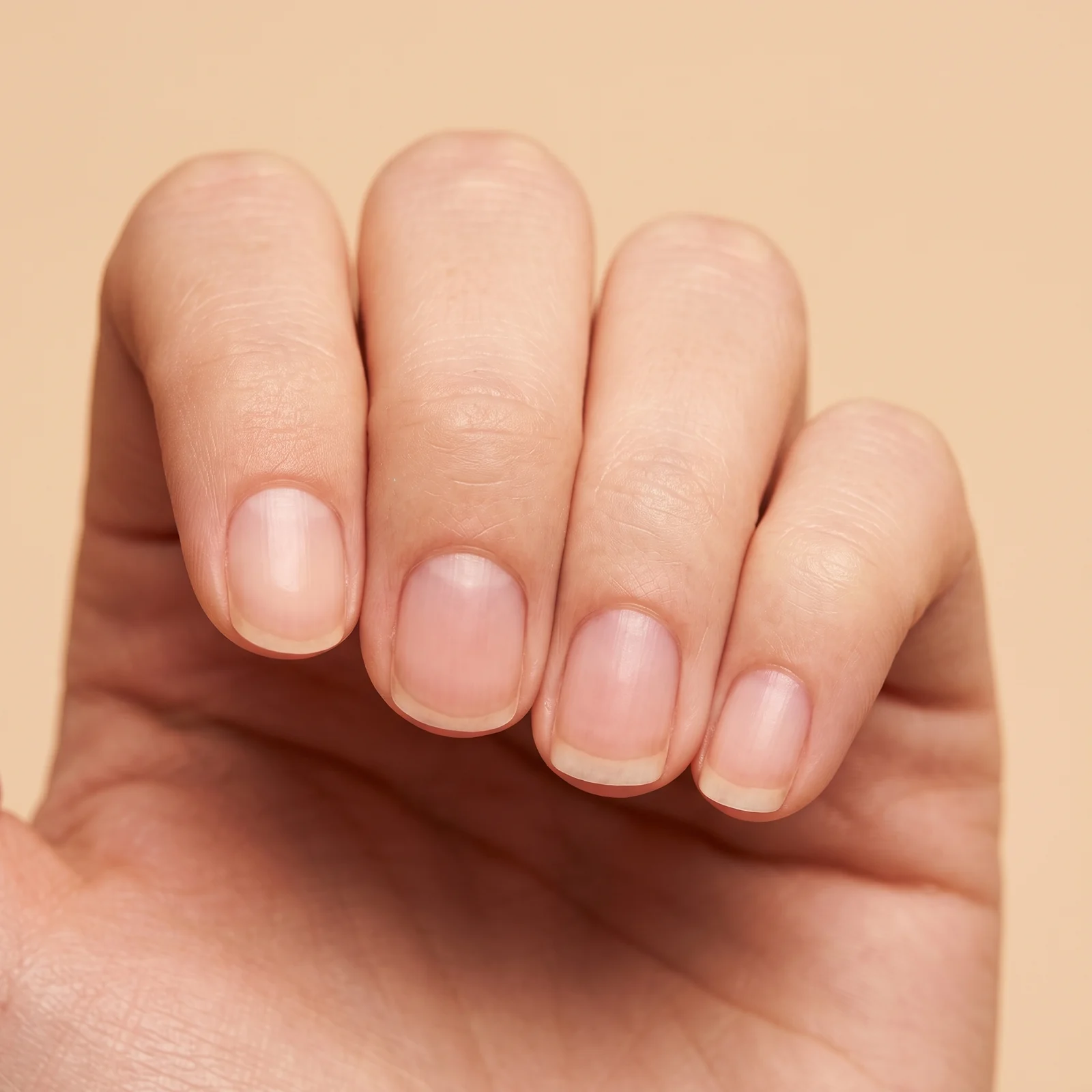
Short bare natural nails with smooth even surfaces, healthy pink nail beds and neat cuticles
  • 1The surface is smooth and even, with no rings, ridges, or scooped out patches.
  • 2The color is consistent, without chalky white patches near the tip.
  • 3It flexes a little rather than snapping or feeling papery.
  • 4The skin around it is calm, not red, itchy, or cracked.
  • 5Nothing is tender when you press the nail or run a file over it.
  • 6The nail stays attached to the bed all the way to the free edge.

Tell us

Signs worth mentioning at your next visit

None of these is an emergency. All of them are easier to solve early, and none of them require you to stop coming.

Bring it up with your technician

ThinningNails feel bendier than they used to, or you can see light through the tip.
HeatYou feel warmth or a sting during filing. Say so in the moment, not afterward.
PeelingThe tip splits into layers, especially in the days after a removal.
Early liftingA set that lifts within the first week or two every single time.

Worth a professional opinion

SkinRedness, itching, swelling, or cracked skin around the nail that keeps coming back.
ColorGreen or dark discoloration under the nail. Come in and let us look before anything goes back on.
SeparationThe nail lifting away from the bed, particularly with any tenderness.
PersistenceThinning or soreness that does not settle as your nails grow out. A dermatologist is the right call.

In our chair

How we keep it gentle

Most of this you will never notice, which is rather the point. It is why an appointment at Earth is not the fastest way to get your nails done, and why we would rather it was not.

We steer guests toward Builder Gel for everyday wear because it is filled rather than replaced, so far less comes off over a year. We remove lifting rather than filling over it, because product trapped over a lifted edge is where moisture and bacteria collect. We file the product and stay off the natural nail. We soak only as long as the product needs and never force what has not released. And if a nail needs a break, we will say so and put you in something gentler for a while.

Guests who want to understand the two systems side by side can read our guide to Builder Gel and Gel-X, which covers wear, upkeep, shapes, and which one suits which kind of week.

Between visits

What actually helps at home

  • 1Cuticle oil every night. A flexible nail bends where a dry one splits.
  • 2Gloves for dishes and cleaning. Hot water and household chemicals loosen the seal.
  • 3Let a tool do the prying and the scraping.
  • 4If an edge lifts, leave it exactly as it is and call us.
  • 5Come in every three to four weeks, and no sooner or longer than that.
  • 6Go shorter for a season if your nails feel thin. Length is the easiest thing to give back.

If a nail snags, lifts, or chips between visits, send us a photo and give us a call. Our team books repairs so the right amount of time is set aside for you.

Questions we hear at the front desk

Good questions

Do I need to take a break from gel?

Not as a rule. A break helps when there is something to recover from, like thinning or persistent peeling, and it does nothing at all if your nails are healthy. If yours are in good shape, continuous wear with careful fills is kinder than stopping and starting.

Is a fill better for my nails than a new set?

Usually, yes, because far less product comes off. A fill reduces and refills what is already there. A new set means removing everything and prepping from bare nail again.

Can I come in sooner than three weeks?

Three to four weeks is the window we book to, and coming in earlier usually means paying for work your nails were not ready for. There is not enough grow out to fill, so a tidy up turns into more filing than it needed to be. If something has lifted or broken, that is different: call us and we will get you in for a repair rather than a full appointment.

My nails are thin now. What should I do?

Go shorter, stay in one system rather than switching, keep up the cuticle oil, and let us do the removals. The thinned part has to grow out, so give it a few months and judge by the new growth near the cuticle, not the tip.

Why does my set keep lifting?

Common reasons are oily nail plates, water exposure, length that is more than your nail bed can leverage, or prep that needed to be different for your nails. Tell us it is happening and we will change the approach rather than repeat it.

Is the skin irritation around my nails normal?

No, and it is worth taking seriously. Redness, itching, or cracked skin that keeps returning can point to a sensitivity rather than dryness. Let us know, and if it persists, see a dermatologist.

Come see us

Let's look at your nails together

Bring your questions to your next appointment and ask for a minute with bare nails. Your technician will tell you honestly what they see.

You Matter More Than You Know